
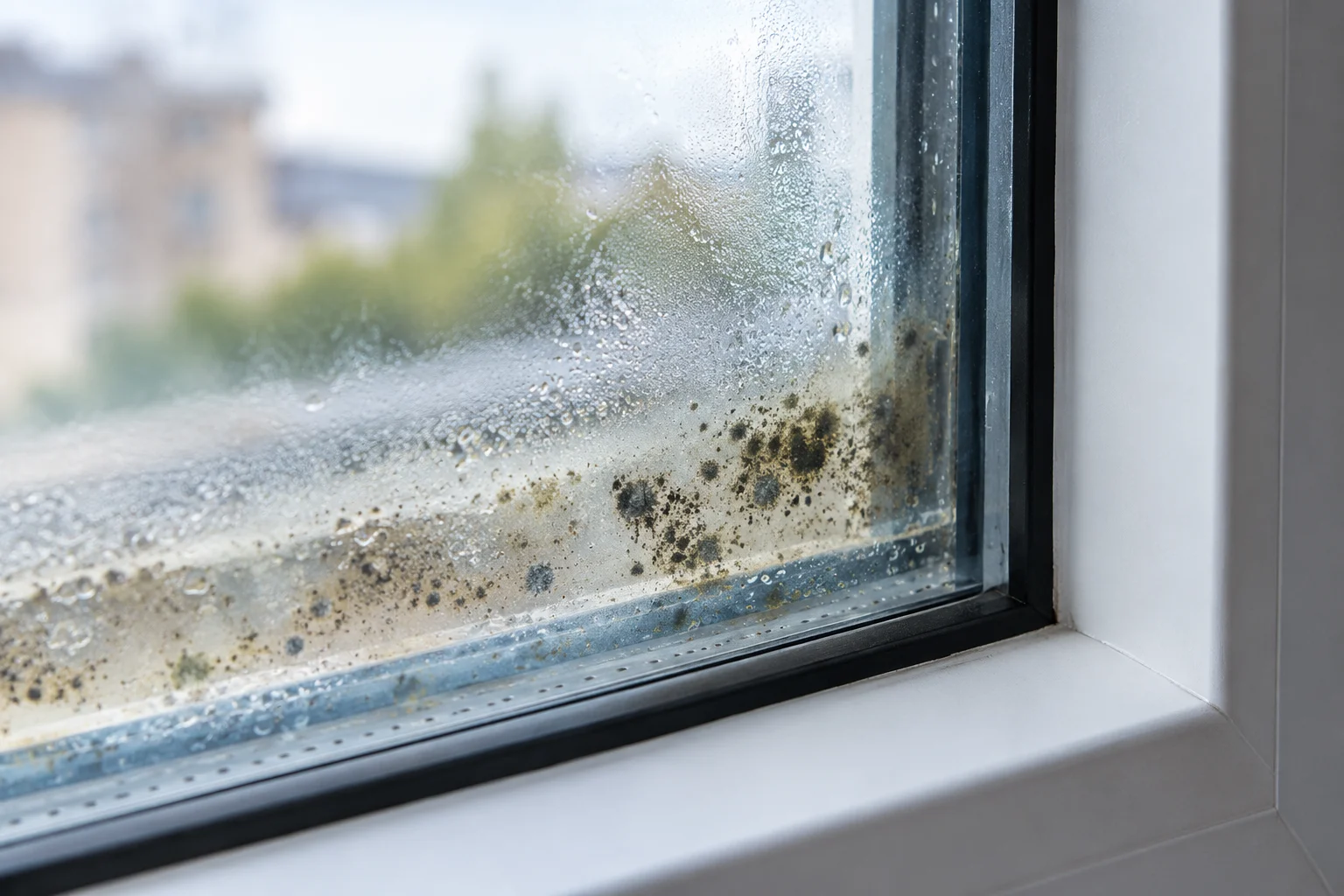
If you’ve noticed a hazy film, dark specks, or fuzzy growth trapped inside your glass, you’re not imagining it mold between window panes is one of the most common (and most misunderstood) window problems we see in Manatee and Sarasota County homes. It’s not surface grime you can wipe away, and it’s not something a bottle of glass cleaner will fix. It’s a sign that something behind the glass has already failed.
In Florida’s heat and humidity, this issue shows up faster and more often than in drier climates. Below, we’ll walk through what’s actually happening inside your window, whether it’s something to worry about, and what your real options are from DIY steps that genuinely help to the point where it’s time to call in a pro.
What Does Mold Between Window Panes Actually Mean?
Most modern windows in Florida are double-pane (or “insulated glass units”), meaning two sheets of glass are sealed together with a thin layer of gas usually argon trapped between them. That seal is what keeps your home’s air conditioning working efficiently and keeps outside heat and moisture out.
When people say they have mold in between window panes, they’re almost always describing one of two things:
- Mold inside window pane cavities growth trapped in that sealed air space, which only happens after the seal has already failed.
- Mold on glass surface growth on the interior or exterior face of the glass, caused by everyday condensation and dust, which is a different (and much easier to fix) problem.
Telling these two apart matters, because the fix and the cost for each is completely different.
Why This Happens So Often in Bradenton and Sarasota Homes?
Florida’s Gulf Coast climate is tough on window seals. Year-round humidity, salt air near the coast, and homes that run air conditioning almost constantly all put extra stress on the rubber and sealant that hold a double-pane window together.
Here’s the typical sequence:
- UV exposure, heat, and age cause the window seal to crack or weaken.
- The insulating gas slowly leaks out and outside air carrying moisture and mold spores leaks in.
- Warm, humid Florida air meets the cooler glass, and condensation forms inside the sealed cavity.
- Trapped moisture, combined with dust and pollen that settled in during manufacturing or through the failed seal, gives mold exactly what it needs to grow.
Once that seal is broken, the moisture cycle repeats every time the temperature or humidity shifts which, in this part of Florida, is often. That’s why mold between double pane windows tends to get worse in the summer rainy season and after big humidity swings, not better.
Is Mold Between Window Panes Dangerous?
This is the question we get most often, and it deserves a straight answer.
Is mold between window panes dangerous to your health? In most cases, the mold trapped inside a sealed glass unit stays inside that sealed cavity it’s not circulating through your home’s air the way mold on a wall or in ductwork would. So the direct health exposure risk is generally low for a truly sealed, intact unit.
That said, there are two important caveats:
- The seal that failed is proof moisture is getting in and it may not stop at the glass. The same failure that let air in around the window edge can also let moisture into the surrounding frame, drywall, and sill, where mold can spread into your living space and become a real air-quality issue.
- Bacteria and mold between window panes can indicate a more advanced problem. If you’re also seeing staining, wood rot on the sill, or a musty smell near the window (not just fogging on the glass), that’s a sign moisture has moved beyond the sealed unit itself.
If anyone in the home has asthma, allergies, or a compromised immune system, it’s worth having the surrounding frame and wall checked, not just the glass. If you’re noticing musty odors, discoloration on drywall, or health symptoms that seem tied to a specific room, that’s a bigger job than a window fix our team can take a look at signs you need a handyman to help you figure out whether this is a simple repair or something that needs a broader inspection.
Mold Spots Inside Double Pane Windows vs. Mold on the Glass Surface
It’s easy to confuse these two, so here’s a quick way to tell them apart:
Mold spots inside double pane windows (sealed failure):
- Appears between the two panes, not on the surface you can touch
- Often accompanied by fogging, cloudiness, or visible moisture droplets trapped inside
- Won’t wipe away no matter what cleaner you use
- Usually shows up gradually, starting at the corners of the glass
Mold on glass (surface condensation):
- Sits directly on the interior or exterior face of the glass
- Can be wiped away with a cloth and cleaning solution
- Tends to reappear if humidity or dust isn’t addressed
- Common on single-pane windows, sliding glass doors, and older aluminum-frame windows
If you can physically touch the mold with a cloth, it’s a cleaning and humidity issue. If it’s trapped behind the glass and you can’t reach it, the seal has already failed.
Can You Clean Mold Between Window Panes Yourself?
Here’s the honest answer, and it’s one a lot of “quick fix” articles skip: you cannot clean mold between window panes without breaking the seal. The whole point of a double-pane window is that the space between the glass is sealed shut. There’s no gap to spray a cleaner into.
Some homeowners try drilling a small hole to release moisture or spraying cleaner into the edge of the frame. We don’t recommend this. It doesn’t remove the mold, and it permanently destroys whatever’s left of the seal meaning the window will fog and collect dust and debris every time the weather changes, with no way to clean it again.
What you can do yourself:
- Clean the interior and exterior glass surfaces regularly to prevent the separate issue of surface mold and dust buildup
- Run a dehumidifier in humid rooms to reduce the moisture load on your windows
- Keep an eye on caulking and weatherstripping around the frame, which is a legitimate DIY maintenance task
- Address any visible frame or sill damage promptly before it spreads to drywall
Repair Options and What They Cost
Once mold is confirmed between the panes, there are really only two paths forward and no cleaning product changes that.
1. Glass unit (insulated glass) replacement If the window frame itself is in good shape, many manufacturers and installers can replace just the sealed glass insert rather than the entire window. This is typically the more affordable option and can often be done in a single visit.
2. Full window replacement If the frame is warped, rotted, or the window is older and no longer under any manufacturer warranty, full replacement is usually the more practical long-term fix. It also gives you the opportunity to upgrade to more energy-efficient, hurricane-rated glass a worthwhile consideration anywhere in Manatee or Sarasota County.
Costs vary widely based on window size, style (single-hung, sliding, impact-rated), and how many windows need attention. As a rule of thumb, glass-only replacement tends to run less than full window replacement, but a hurricane-rated impact window will cost more upfront than a standard unit. For a general sense of what local repair and installation work runs in this area, our breakdown of handyman costs in Bradenton is a useful starting point before you get quotes.
If you’re still under a manufacturer’s warranty, check it before paying out of pocket many window manufacturers cover seal failure for 10, 15, or even 20 years, though the cost of installation labor often isn’t included.
The Hidden Risk for Seasonal Homes and Snowbird Properties
This is where Bradenton and Sarasota really differ from a lot of the country, and it’s a gap most articles on this topic miss entirely: a huge share of homes here sit empty for months at a time.
When a home is closed up for the summer with the air conditioning set high (or off) to save on utility bills, indoor humidity climbs fast. Combined with our outdoor humidity levels, that’s exactly the environment that accelerates seal failure and mold growth and nobody’s there to notice a fogging window until they fly back in November.
This is one of the most common issues we catch during scheduled visits for clients enrolled in our Bradenton home watch service. A window that starts fogging in June can turn into a much bigger moisture and mold problem by the time a seasonal homeowner returns in the fall but caught early, it’s a straightforward repair. If you split your time between Florida and somewhere else and aren’t sure what a watch service actually covers, we’ve laid it out in what is a home watch service.
Preventing Mold Between Window Panes in Florida’s Climate
You can’t fully prevent every window seal from eventually aging out, but you can slow it down significantly and catch problems early.
- Run your AC consistently, even when away. Keeping indoor humidity in the 45–55% range reduces stress on window seals and slows condensation.
- Inspect windows quarterly, especially before and after hurricane season, for early fogging or moisture between panes.
- Keep gutters and drainage clear near windows so pooling water isn’t sitting against frames and sills.
- Check exhaust fans in bathrooms and laundry rooms to make sure humid air is actually venting outside rather than into the wall cavity near nearby windows. If your fans aren’t pulling air the way they should, our Bradenton electrician service team can inspect and replace them.
- Reseal exterior caulking around window frames every couple of years, since Florida sun degrades caulk faster than in most climates.
If you’re doing your seasonal storm prep anyway, it’s worth folding a window check into that routine. Our hurricane home prep checklist is a good place to add “inspect window seals” as an annual line item.
DIY vs. Calling a Professional
A little judgment goes a long way here. Cleaning surface mold off glass, running a dehumidifier, and touching up exterior caulk are all reasonable DIY tasks. But once mold is confirmed between the panes inside a sealed unit there’s no DIY fix that actually solves the problem, only ones that make it look better temporarily.
Bring in a professional when:
- Mold or fogging is confirmed between the panes, not just on the surface
- You notice soft, discolored, or spongy wood on the sill or frame
- Multiple windows in the home are showing the same issue (often a sign of a broader ventilation or humidity issue)
- The home has sat vacant for an extended period and you’re not sure what condition the windows are in
If you’re already noticing other maintenance items piling up around the house, it’s often more efficient to have a licensed team address several small issues in one visit rather than one at a time.
Frequently Asked Questions
Does homeowners insurance cover mold between window panes?
Typically no. Most standard homeowners policies exclude mold damage that results from gradual wear, like an aging window seal, rather than a sudden, covered event like a burst pipe. Check your specific policy, but budget for this as a maintenance cost rather than an insurance claim in most cases.
Can mold between window panes spread to the rest of my house?
Mold sealed inside an intact glass unit generally stays contained. The bigger risk is the moisture that caused the seal failure spreading into the surrounding frame and wall, which is a separate but related concern worth checking.
How long does it take for mold to develop after a seal fails?
It varies with humidity and season, but in Florida’s climate, visible fogging or spotting can appear within a few weeks to a few months of a seal failing faster during our hottest, most humid stretches.
Is a foggy window always a sign of mold?
Not always sometimes it’s just moisture or dust between the panes without visible mold yet. But a persistently foggy window means the seal has failed either way, and mold is only a matter of time.
Final Thoughts
Mold between window panes almost always traces back to one root cause: a failed seal letting moisture where it shouldn’t be. It’s rarely an emergency, but it’s not something that improves on its own, and no amount of glass cleaner will reach the problem. Catching it early through a routine inspection, a seasonal check before hurricane season, or a scheduled visit while you’re away keeps a small window issue from becoming a bigger one involving frames, sills, or drywall.
Shoreline Handyman & Home Watch Services has spent years helping homeowners across Bradenton, Manatee County, and Sarasota County identify exactly this kind of issue before it grows into something more costly, whether the home is lived in daily or sits empty for half the year.
If you’ve spotted fogging, spotting, or mold between your window panes and want an honest read on whether it’s a simple fix or something bigger, reach out to our team for a straightforward assessment.