
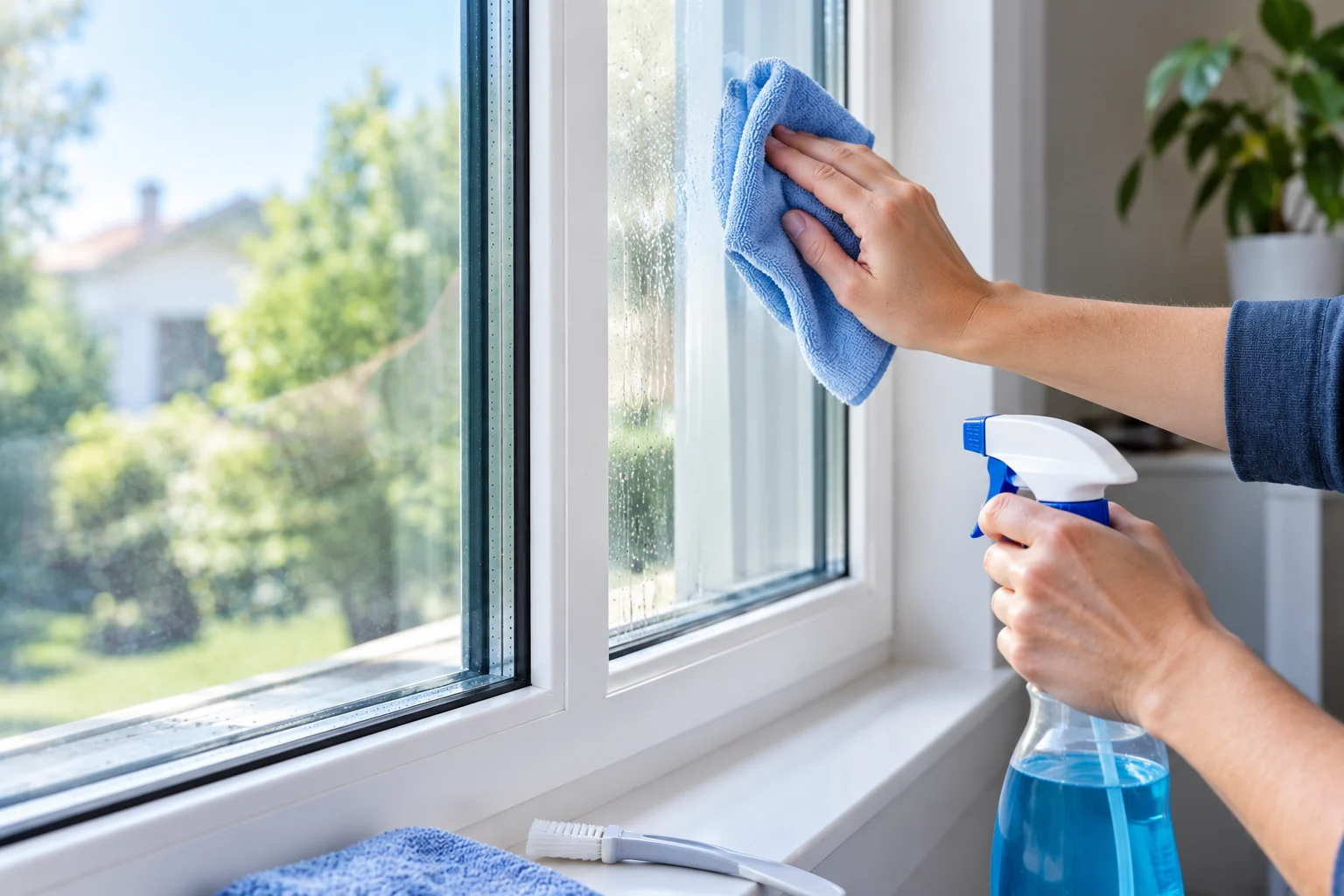
If you’ve searched for how to clean inside double pane windows, you’ve probably already run into a frustrating truth: you can’t just spray glass cleaner on the interior pane and wipe away the haze. Double pane windows are built as a sealed unit, and that sealed airspace is exactly what makes cleaning “inside” the glass different from washing the outside. Here in Bradenton, Manatee County, and Sarasota County, our humidity and salt air make foggy or moldy windows an especially common complaint.
This guide covers what you can safely clean yourself, what a cloudy or moldy window is actually telling you, and when it’s time to call a professional instead of reaching for a drill.
Why You Can’t Just Wipe the “Inside” of a Sealed Window
A double pane (insulated glass) window is two panes of glass separated by a spacer and sealed around the edges, with air or argon gas trapped in between. That sealed gap is what gives the window its energy efficiency and helps it hold up to Florida’s heat and humidity.
As long as the seal is intact, there’s no interior surface to reach the space between the panes is airtight and was never meant to be opened. When people search for how to clean between double pane windows, what they’re usually describing is condensation, dirt, or mold that has already worked its way into that gap. That’s a sign the seal has failed, not a routine cleaning job.
How to Clean Inside Double Pane Windows With a Good Seal?
If your window still looks clear and the haze is only on the room-side surface of the glass, you’re dealing with ordinary household grime, not a failed seal. That surface cleans just like any other window you just want to be gentle around the frame and weatherstripping.
Tools You’ll Need
- A vacuum with a brush attachment, for tracks and frames
- A soft microfiber cloth or two
- Mild dish soap, or a 1:1 white vinegar and water solution
- A spray bottle
- A rubber squeegee
- A soft-bristle paintbrush or cotton swabs, for corners
Step-by-Step Cleaning Process
- Vacuum the frame, sill, and tracks first, so loose dirt and sand don’t scratch the glass while you wipe it.
- Mix a mild dish soap solution or a vinegar-and-water mix in your spray bottle.
- Spray the cloth, not the glass directly, to keep excess moisture away from the seal and weatherstripping.
- Wipe the interior pane top to bottom in overlapping passes so drips don’t streak sections you’ve already cleaned.
- Use a cotton swab or soft brush along the edges and corners of the glass without digging into the sealant.
- Finish with a squeegee or dry microfiber cloth to prevent water spots.
- Clear the weep holes along the bottom track while you’re at it clogged weep holes are one of the most common reasons Florida windows trap moisture in the first place.
If a window is painted shut, the track is warped, or the sash won’t move far enough to clean properly, that’s usually a frame or hardware problem rather than a glass problem. Our Bradenton handyman services cover frame and track repairs like this, so cleaning day doesn’t turn into a wrestling match with a stuck window.
How to Clean Between Double Pane Windows When the Seal Has Failed
Once you see fogging, streaking, or dirt trapped between the panes, cleaning between window panes isn’t really a cleaning task anymore it’s a sign the insulated glass seal has broken down and outside air and moisture are getting in.
You’ll find plenty of DIY tutorials online suggesting you drill small holes in the glass and flush the gap with rubbing alcohol, or drop in a desiccant packet to soak up moisture. We’ll be straightforward with you: these tricks can temporarily reduce the haze, but they don’t restore the insulating gas or the seal, they can void a manufacturer’s warranty, and drilling into tempered or impact glass carries real risk of cracking the pane.
In most cases, the more reliable long-term fix is resealing or replacing the insulated glass unit, which we cover in detail in our full resealing guide, including what it costs and how long it typically takes.
Mold Between Window Panes: What It Means and Why It Happens Here
Mold between window panes is one of the most common reasons Bradenton and Sarasota homeowners search for double pane window cleaning in the first place. Once a seal fails, humid air gets pulled into that gap every time the temperature shifts between the hot outdoors and an air-conditioned interior. That trapped moisture, combined with dust that was sealed in during manufacturing, gives window mold exactly what it needs to grow.
Because this is such a common and often confusing issue on the Gulf Coast, we’ve written a dedicated guide that walks through causes, warning signs, and repair options in more depth you can read our full breakdown of mold between window panes if you want to go further than this section.
Can Mold Grow on Glass?
Glass itself is non-porous, so mold can’t feed on the glass the way it can feed on wood, drywall, or fabric. What you’re usually seeing on the glass is mold growing on the dust, pollen, or organic film sitting on the surface, or on the frame and spacer material right at the edge of the pane. That’s why mold on window glass often wipes off the outer layer easily, while mold that has reached the frame or sill is a longer job.
Is Mold on a Window Sill Dangerous?
Mold on a window sill can be more than a cosmetic issue, especially for household members with asthma, allergies, or a compromised immune system. Exposure to mold spores is commonly linked to nasal congestion, coughing, sneezing, and irritated eyes, and reactions tend to be stronger the longer the mold sits untreated. Black mold on window sills and frames deserves particular attention, since prolonged exposure has been associated with more persistent respiratory symptoms in sensitive individuals.
The good news is that mold confined to the glass and a sealed vinyl or aluminum sill is usually manageable. The concern grows if window mold has spread onto porous materials like wood trim, drywall, or curtains, where it can take hold well beyond what you can see or reach with a cloth.
DIY vs. Professional: When to Call Someone About Window Mold or Fogging
Light surface mold on glass or a sealed sill can often be handled yourself with a diluted bleach solution or a commercial mold-and-mildew cleaner, protective gloves, and good ventilation while you work. That said, a few situations are worth a professional opinion rather than another round of scrubbing.
- The mold keeps coming back within days or weeks of cleaning it
- You see black mold on window frames, trim, or drywall, not just the glass
- The window itself is visibly fogged between the panes, indicating a failed seal
- You’re dealing with several windows at once, which often points to a whole-home humidity problem
- Anyone in the household has asthma, allergies, or another condition that makes mold exposure riskier
If any of that sounds familiar, it’s worth having someone take a look before the problem spreads. You can request a free estimate and we’ll assess whether you’re looking at a simple cleaning, a reseal, or something bigger.
How Bradenton and Sarasota Humidity Speeds Up Window Seal Failure
Insulated glass seals wear out everywhere over time, but our climate is harder on them than most. Year-round humidity, near-constant air conditioning cycling, and salt-laden coastal air all put extra stress on the rubber and sealant that hold a double pane unit together. Add in the pressure changes and wind-driven rain that come with Florida’s storm season, and seals here can fail years earlier than the same window would in a drier, milder climate.
If you’re preparing your home for storm season anyway, it’s worth folding a window and seal check into that routine our hurricane home prep checklist covers the other areas of the house worth a look at the same time.
Preventive Maintenance to Keep Double Pane Windows Clear Longer
- Run your AC or a dehumidifier consistently and aim to keep indoor humidity around 30–50%.
- Clean tracks and weep holes a few times a year so they can drain properly during heavy rain.
- Inspect exterior caulking and weatherstripping annually, and reseal any gaps before they let moisture in.
- Avoid pressure-washing directly at window seals, which can force water past the sealant.
- Address any new fogging or haze between the panes as soon as you notice it, rather than waiting for it to worsen.
Fogging windows are often just one symptom of a home that’s due for a broader maintenance pass. If you’re noticing other small issues around the house too, our post on signs you need a handyman can help you figure out what’s worth tackling at the same time.
Window Care for Snowbirds and Vacant Homes
A lot of homes in Manatee and Sarasota Counties sit empty for weeks or months at a time while owners are up north. Without anyone around to notice a little condensation or a musty smell, mold between window panes or on a window sill can develop and spread for months before anyone catches it.
This is exactly the kind of issue a routine home watch service is built to catch early. During scheduled visits, we check windows, doors, and humidity levels along with the rest of the property, so a small seal or moisture issue doesn’t turn into a mold problem by the time you’re back in town. If you’re not familiar with how these visits work, our overview of what a home watch service actually includes is a good place to start.
Cost Considerations: Cleaning, Resealing, or Replacing Glass
Cleaning the interior surface of a window with an intact seal costs nothing but your own time and a few basic supplies. Once a seal has failed, though, the cost depends on the repair path:
- Resealing or replacing just the insulated glass unit is typically less expensive than a full window replacement and can often be done in a single visit.
- Full window replacement costs more up front but makes sense for older windows nearing the end of their lifespan or with damaged frames.
- Mold remediation costs vary depending on whether it’s limited to the glass and sill or has spread into surrounding wood or drywall.
Pricing always depends on the specifics of the job, but if you want a general sense of what handyman-scale repairs run in this area, our guide to handyman costs in Bradenton is a useful starting point before you get a quote.
The Bottom Line
Cleaning the inside surface of a double pane window with a good seal is a simple job with the right supplies and a little patience. Once haze, dirt, or mold shows up between the panes, though, you’re looking at a failed seal rather than a cleaning task, and no amount of vinegar or drilled holes will fully undo that. Paying attention to Florida’s humidity, keeping an eye on window sills for early mold, and knowing the difference between a surface clean and a seal repair will save most homeowners a lot of frustration.
Shoreline Handyman & Home Watch Services has spent years helping homeowners across Bradenton, Manatee County, and Sarasota County sort out exactly this kind of question whether a window just needs a good wipe-down or something more involved.