
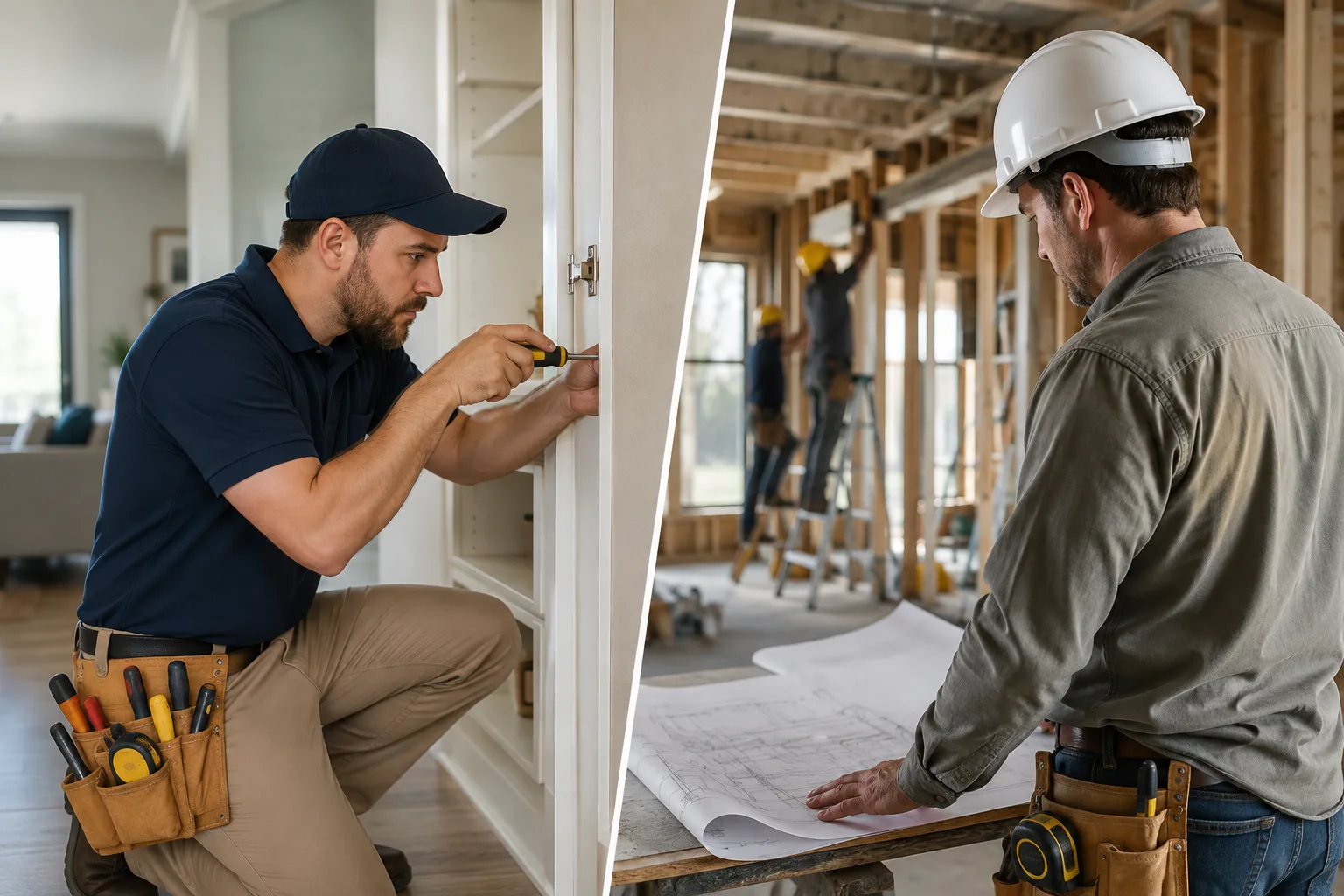
If you’ve got a project on your to-do list, you’ve probably asked yourself the handyman vs general contractor question at some point. It’s one of the most common points of confusion for homeowners in Bradenton, Manatee County, and Sarasota County, and getting it wrong can cost you time, money, or even a failed home inspection down the road. The short version: a handyman handles smaller repairs and maintenance, while a general contractor manages larger, permitted construction projects. The right answer depends on the size of the job, whether it touches your home’s structure or systems, and what Florida law requires for that specific type of work.
What Is a Handyman?
A handyman is a skilled, versatile pro who handles the small-to-medium jobs that keep a home running smoothly. Think drywall patches, minor carpentry, fixture swaps, caulking, deck repairs, and the dozen little things that pile up on a homeowner’s list. A good handyman can often knock out several unrelated tasks in a single visit, which makes them a practical choice for routine upkeep rather than a single large project.
In Florida, handyman work generally covers repairs and maintenance that don’t rise to the level of new construction or structural change. That includes things like fixing a running toilet, patching a section of drywall, replacing door hardware, or touching up exterior paint. It does not typically include work that changes a home’s structure, electrical system, or plumbing configuration in a significant way, which is where licensing law starts to matter.
What Is a General Contractor?
A general contractor (GC) is a licensed construction professional who plans, coordinates, and takes legal responsibility for larger projects. That includes home additions, full kitchen or bathroom remodels, structural repairs, and any job that requires pulling permits and scheduling inspections. A GC typically manages a team of subcontractors, including electricians, plumbers, and framers, and is accountable for the project meeting local building codes.
Because a general contractor’s license carries legal weight, hiring one gives you access to formal contracts, permit pulling, and a documented chain of accountability if something goes wrong. This is the layer of protection that separates a licensed contractor vs handyman relationship, especially on jobs where safety and code compliance are non-negotiable.
Handyman vs. General Contractor: Key Differences at a Glance
The difference between a handyman and a contractor comes down to four things: scope, licensing, cost, and liability.
• Scope of work: Handymen handle small, independent repairs. General contractors manage multi-trade projects from start to finish.
• Licensing: Florida doesn’t issue a specific “handyman license,” but general contractors must hold a state-issued license through the Department of Business and Professional Regulation (DBPR).
• Permits: Only a licensed contractor can legally pull building permits for work that requires them.
• Liability and insurance: Licensed contractors carry contractor-level insurance and bonding; handyman coverage is typically lighter and scoped to smaller repair work.
Understanding these distinctions upfront helps you avoid hiring the wrong professional for the job, which is a mistake that can delay a project or create code violations that surface later during a home sale.
Florida Licensing Rules: When You Legally Need a Contractor?
Florida law draws a real, legal line between handyman work and contractor work, and it’s tied to dollar amount and project type, not just how “big” a job feels. Under Chapter 489 of the Florida Statutes, projects that involve structural changes, electrical work, plumbing, or HVAC installation generally require a licensed contractor, regardless of cost. For general repair and maintenance work, many contractors and industry guides point to a combined labor-and-materials threshold in the neighborhood of $1,000 as the point where a licensed contractor becomes legally required, though the statute’s language focuses more on whether the work is “casual, minor, or inconsequential” than on a single hard number, so it’s worth confirming with a licensed pro if a project is close to that line.
This matters in Manatee and Sarasota County specifically because local building departments enforce these rules at the permit level. If a job needs a permit and an unlicensed handyman pulls it (or skips it entirely), you could run into problems later, whether that’s a failed home inspection, an insurance claim denial, or complications when you go to sell the property. This is exactly why licensed, code-aware pros matter for anything beyond routine maintenance, and it’s a standard we hold ourselves to on every job we take on through our Bradenton handyman repair services.
Cost Comparison: Handyman Rates vs. General Contractor Rates
Cost is one of the biggest factors homeowners weigh when deciding between a small renovation vs repair approach. Handyman pricing is typically hourly or flat-rate per task, and it reflects the smaller scope of the work: a leaky faucet repair, a few drywall patches, or hanging a ceiling fan. General contractor pricing is project-based and includes labor, materials, permit fees, subcontractor coordination, and the overhead of managing a multi-week job.
As a rough guide, a single handyman visit for a repair or small task list tends to cost a fraction of what a permitted renovation runs, simply because the scope and liability are so different. A kitchen remodel or room addition involves design decisions, code compliance, and multiple trades, which is reflected in a general contractor’s bid. If you’re not sure which category your project falls into, a quick conversation with a local pro can save you from getting a quote that doesn’t match the actual scope of work.
If you want a clearer sense of what to budget before you call around, we broke down real local pricing by project type in our Bradenton handyman cost guide, which covers hourly rates, flat-rate jobs, and what tends to push a price up or down in Manatee and Sarasota County.
Small Renovation vs. Repair: How to Tell Which One You Have
One of the most common points of confusion is figuring out whether a project counts as a “repair” or a “renovation,” since that distinction often determines whether you need a handyman or a licensed contractor. A repair generally restores something to working condition without changing its structure or footprint, like replacing a broken cabinet hinge or patching a section of stucco. A renovation changes the layout, structure, or systems of a space, like knocking out a wall, relocating plumbing, or adding square footage.
A helpful test: if the project requires a permit, involves structural changes, or touches your home’s electrical or plumbing systems in a significant way, it’s leaning toward renovation and general contractor territory. If it’s a standalone fix that restores something to working order without altering the structure, a handyman can usually take care of it safely and affordably.
When to Hire a General Contractor?
There are clear signals that a project calls for a licensed general contractor rather than a handyman. These include:
• The project requires a building permit. Additions, structural repairs, and most major renovations fall into this category.
• Multiple trades need to be coordinated. A full bathroom remodel might involve a plumber, electrician, tile setter, and drywall crew, all working on a schedule.
• The work affects load-bearing walls or the home’s structure. Anything structural should go through a licensed professional who understands local building codes.
• You want a single point of accountability. A GC is contractually responsible for the finished project meeting code, which matters on larger financial commitments.
If your project checks any of these boxes, it’s worth getting a scope-of-work conversation started early rather than assuming a smaller repair crew can absorb the job.
When a Handyman Is the Right Call?
On the flip side, plenty of home projects are perfectly suited to a handyman, and hiring a general contractor for them would be overkill. These include fixture replacements, minor drywall and paint touch-ups, gutter cleaning, small carpentry repairs, weatherproofing, and general home maintenance that keeps a property in good shape between bigger projects.
Homeowners in Bradenton and throughout Manatee and Sarasota County often find that a reliable handyman is the more practical choice for the steady stream of small tasks that come with owning a home, especially older homes or seasonal properties that need regular attention. If you’re not sure whether a specific project is something a handyman can handle or a sign you need to call in more specialized help, our post on signs you need a handyman instead of DIYing it walks through the clearest indicators to watch for. If you’ve got a running list of small repairs, it’s usually more efficient to knock them out in a single visit than to search for a separate specialist for each item.
Safety and Liability: Why Licensing and Insurance Matter?
Licensing isn’t just a formality, it’s what protects you if something goes wrong. A licensed contractor carries insurance and bonding that covers property damage or injury tied to the project, and their license means they’ve demonstrated the competency to handle code-regulated work. Hiring an unlicensed person for a job that legally requires a license can leave you personally exposed if there’s an accident, a code violation, or a dispute over payment.
Electrical and plumbing work deserve particular caution here, since mistakes in these systems can create fire hazards or water damage that isn’t always obvious right away. If a project involves rewiring, panel work, or anything beyond a straightforward fixture swap, it’s worth working with a properly licensed electrician rather than assuming a general handyman can safely take it on. Our licensed electrician services exist for exactly this reason, so homeowners have a properly credentialed option when a job crosses that line. The same logic applies to plumbing systems, where a small mistake with drain lines or water pressure can turn into a much bigger repair, which is why our plumbing services are handled by pros who understand both the trade and the local code requirements.
Seasonal Considerations for Bradenton and Sarasota Homeowners
Florida’s climate adds a layer most national guides skip entirely. Gulf Coast homes deal with intense sun, salt air, humidity, and hurricane season, all of which accelerate wear on exterior surfaces, caulking, fasteners, and roofing details. Routine handyman maintenance, like resealing windows, checking exterior caulk, and inspecting fascia and soffits, plays a real role in preventing small issues from becoming expensive storm-season problems.
Before hurricane season, many homeowners also schedule storm prep tasks like securing loose fixtures, checking shutters, and clearing gutters, all of which fall squarely into handyman territory. For seasonal residents who split time between Florida and another state, this is also where regular property oversight becomes valuable, since small maintenance issues can go unnoticed for months without someone checking in. That’s the gap our home watch services are built to fill, with scheduled inspections, storm preparation, and detailed reporting so seasonal homeowners aren’t caught off guard when they return.
DIY vs. Hiring a Pro: Where the Line Should Be?
Plenty of homeowners are comfortable tackling small projects themselves, and that’s often the right call for simple, low-risk tasks like touch-up painting or assembling furniture. The line to watch for is anything involving electrical systems, gas lines, plumbing connections, or structural elements, where a mistake isn’t just inconvenient, it can be genuinely dangerous or expensive to fix later.
A good rule of thumb: if a mistake could affect your home’s safety, resale value, or insurance coverage, it’s worth paying for professional judgment rather than guessing. Even something that looks simple, like replacing an outlet or rerouting a drain line, can cross into licensed-work territory under Florida law, which is a good reason to check before starting.
Common Projects: Handyman or General Contractor?
Here’s a quick reference for how typical home projects usually break down:
| Project | Typically Handled By |
| Leaky faucet or toilet repair | Handyman (or licensed plumber for complex issues) |
| Drywall patching and painting | Handyman |
| Ceiling fan or fixture installation | Handyman |
| Full kitchen or bathroom remodel | General contractor |
| Home addition or structural change | General contractor |
| Panel upgrade or rewiring | Licensed electrician |
| Deck or fence repair | Handyman |
| New roof installation | General contractor or licensed roofer |
| Seasonal home inspections while away | Home watch service |
This isn’t an exhaustive list, but it covers the projects homeowners in our area ask about most often, and it’s a useful starting point before you start calling around for quotes.
How to Choose the Right Pro for Your Bradenton Home?
Start by defining the scope of the work as clearly as you can. Is it a standalone repair, or does it involve multiple systems and a permit? From there, ask any pro you’re considering about their licensing, insurance, and whether the specific work you need falls within what they’re legally allowed to do.
It’s also worth asking directly: “Does this project need a permit?” A trustworthy handyman will tell you honestly if a job is outside their scope and needs to go to a licensed contractor or specialty tradesperson instead. If you’re not sure which category your project falls into, reaching out for a straightforward conversation is often faster than guessing, and it’s something our team is happy to help homeowners sort through before any work begins.
Frequently Asked Questions
Can a handyman do electrical or plumbing work in Florida?
A handyman can typically handle very minor tasks, like replacing a light fixture or a faucet, but anything involving rewiring, new circuits, or altering plumbing lines generally requires a licensed electrician or plumber under Florida law.
Do I need a permit for a small home repair?
Most minor repairs and maintenance tasks don’t require a permit. Structural changes, additions, and most electrical or plumbing modifications typically do, and permit requirements can vary slightly by county.
Is it cheaper to hire a handyman than a general contractor?
For small, standalone tasks, yes. A handyman’s pricing reflects a smaller scope of work, while a general contractor’s pricing includes project management, permitting, and multi-trade coordination that’s necessary for larger jobs.
What happens if I hire an unlicensed person for work that requires a license?
You could face issues with insurance claims, code violations, or difficulty selling your home later if unpermitted work is discovered. It can also leave you without recourse if the work causes damage or doesn’t hold up.
Who do I call for storm damage or hurricane prep in Manatee County?
For minor repairs and storm-prep tasks like securing fixtures and checking exterior seals, a handyman is usually the right first call. Larger structural storm damage typically needs a licensed general contractor or specialty tradesperson.
Conclusion
Deciding between a handyman and a general contractor really comes down to the size, complexity, and legal requirements of the project in front of you. Small repairs, routine maintenance, and standalone fixes are handyman territory, while permitted renovations, structural work, and multi-trade projects call for a licensed general contractor. Knowing that difference, and understanding where Florida’s licensing rules draw the line, helps homeowners in Bradenton, Manatee County, and Sarasota County make a confident, informed choice instead of guessing. That’s the kind of practical, honest guidance Shoreline Handyman & Home Watch Services has built its reputation on with local homeowners.