
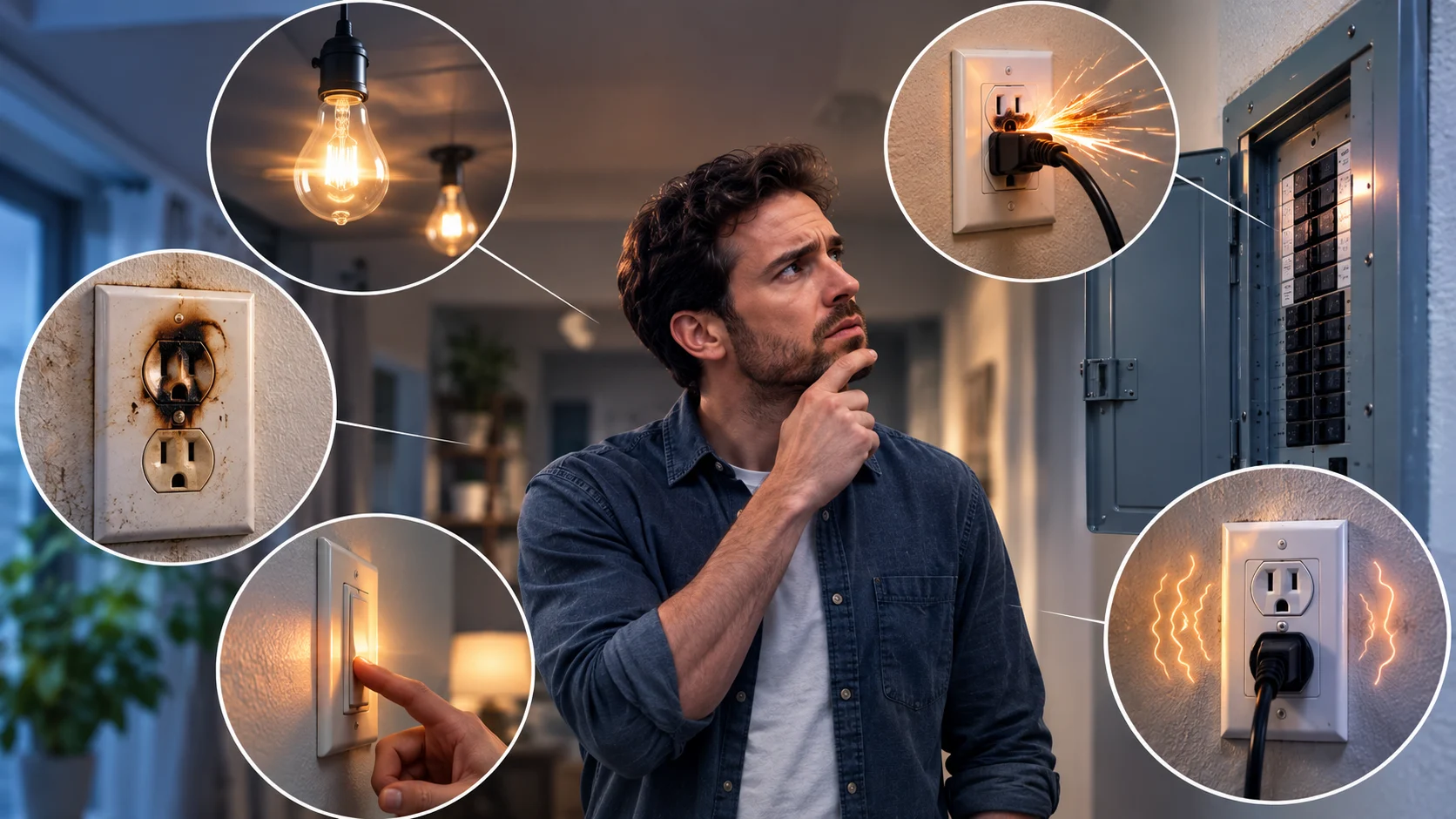
Most homeowners don’t think about their electrical system until something goes wrong, and by then, the problem has often been building for months. Learning to recognize the signs of electrical problems early can mean the difference between a simple repair and a house fire. In Bradenton, Manatee County, and Sarasota County, Florida’s heat, humidity, and frequent storms put extra strain on home electrical systems, especially in older houses. Below, we break down the five most common warning signs, why they happen, and exactly when it’s time to call a licensed electrician.
Why Bradenton and Sarasota Homes Are Especially Prone to Electrical Issues?
Florida’s Gulf Coast climate is hard on wiring. High humidity accelerates corrosion inside outlets and panels, salt air near the coast speeds up metal degradation, and summer storms bring power surges that stress circuits over time. Many neighborhoods across Manatee and Sarasota County also have homes built decades ago, some with aluminum branch wiring or electrical panels that were never designed to handle central air conditioning, modern kitchens, and today’s number of plugged-in devices.
That combination of an aging housing stock and a demanding climate is exactly why electrical warning signs show up more often here than in newer inland construction. If your home was built before the 1990s and hasn’t had an electrical inspection recently, it’s worth being proactive rather than waiting for a visible problem.
1. Flickering, Dimming, or Buzzing Lights
Lights that flicker, dim when the air conditioner kicks on, or buzz faintly are one of the most common electrical warning signs in a home, and one of the most commonly dismissed. Occasionally it’s nothing more than a loose bulb. More often, it points to a loose wiring connection, an overloaded circuit, or a fluctuating voltage supply feeding that part of the house.
What Causes Flickering Lights in Older Florida Homes
In many Bradenton-area houses, flickering lights trace back to worn connections in the breaker panel, corroded wire nuts inside older junction boxes, or a single circuit trying to power too many rooms at once. If the flickering happens across the entire house rather than one fixture, it can also signal a problem at the utility connection or the main electrical panel itself, which is not something to troubleshoot on your own.
A flickering bulb here and there usually isn’t an emergency. Flickering that’s frequent, spreads to multiple rooms, or comes with a buzzing sound is a good reason to schedule an inspection before it develops into a bigger issue.
2. Frequently Tripping Breakers or Blown Fuses
A breaker is designed to trip. That’s its job, cutting power the instant it senses an overload or short so nothing downstream overheats. The problem isn’t an occasional trip; it’s a breaker that trips repeatedly, sometimes multiple times a week, even when you haven’t added any new appliances.
Frequent trips usually mean one of three things: the circuit is overloaded for what it was built to carry, there’s a short circuit somewhere in the wiring, or the breaker itself is worn out and no longer holding a stable connection. Guest bedrooms converted into home offices, garages with new power tools, and older kitchens running modern appliances are common culprits we see across Manatee County.
If you’re resetting the same breaker more than once a month, that’s not a habit to get used to. It’s a sign the circuit needs to be evaluated by a licensed electrician who can pinpoint whether the fix is a simple rebalancing of the load or a larger wiring issue.
3. Warm, Discolored, or Sparking Outlets and Switches
Outlets and switch plates should always feel cool to the touch. If one feels warm, looks scorched or yellowed around the edges, or produces a visible spark when you plug something in, that’s heat building up somewhere it shouldn’t be, usually from a loose connection, a worn receptacle, or wiring that’s carrying more current than it was rated for.
This is one of the faster-moving faulty wiring signs, because heat damage compounds. A slightly warm outlet today can become a scorched, non-functional one within weeks if the underlying connection keeps arcing every time it’s used.
Stop using any outlet that’s warm, discolored, or sparking immediately, unplug what’s connected to it, and leave the breaker for that circuit off until it’s inspected. This is not a DIY repair.
4. Burning Smells or Unusual Odors Near Outlets, Switches, or the Panel
A faint, acrid, plastic-like smell near an outlet, switch, or your electrical panel is one of the clearest signs of electrical problems a home can give you, and one you should never wait on. That smell typically comes from insulation or plastic components overheating, which is the same process that precedes an electrical fire.
If you notice this odor, don’t wait for a follow-up appointment days later. Shut off power to that circuit at the panel if you can safely do so, avoid using the outlet or switch, and call for emergency electrical service the same day. This is one of the few signs on this list where hours matter.
5. Mild Shocks or Static When Touching Switches, Outlets, or Appliances
Feeling a small shock or static-like tingle when you touch a light switch, an appliance, or even a metal water fixture is usually a sign your home’s electrical system isn’t properly grounded. In some older Bradenton and Sarasota homes, a two-prong system was updated to three-prong outlets without actually adding a real ground path, which leaves appliances technically ungrounded even though the outlet looks modern.
A single, barely-noticeable static pop usually isn’t cause for alarm. A shock strong enough to notice, or one that happens consistently at the same outlet or appliance, means there’s a grounding problem that should be diagnosed before someone gets a more serious jolt.
Other Faulty Wiring Signs Worth Watching For
Beyond the five signs above, a few less obvious clues are worth keeping on your radar, especially in homes that haven’t had an electrical update in ten or more years:
● A persistent humming or buzzing sound from the electrical panel itself, not just individual outlets.
● Discoloration, rust, or a burning smell coming from inside the panel when the cover is opened.
● Outlets that no longer hold a plug snugly, which allows arcing every time something is plugged in.
● Rooms or entire circuits that lose power for no clear reason, especially if neighbors’ power is unaffected.
● Aluminum wiring, common in homes built in the 1960s and 1970s, which can loosen at connection points over time and is considered a higher fire risk than copper.
None of these are DIY diagnoses. They’re reasons to schedule a professional inspection before the issue progresses from an inconvenience to a safety hazard.
When to Call an Electrician vs. When You Can Wait?
Not every electrical quirk requires an emergency call, but knowing the difference matters. Here’s a practical way to think about it.
Situations That Can Usually Wait for a Scheduled Visit
● A single light flickers only when one specific old bulb is used.
● A GFCI outlet trips occasionally in a bathroom or kitchen near water.
● A ceiling fan or fixture feels slightly loose but shows no heat or discoloration.
Situations That Need a Same-Day or Emergency Call
● Any burning smell near outlets, switches, or the panel.
● Sparking, visible scorch marks, or an outlet too hot to touch.
● A breaker that won’t reset, or one that trips again within seconds.
● Any shock stronger than a light static pop.
As a general rule, anything involving your breaker panel, exposed wiring, or a suspected short circuit belongs in the hands of a licensed professional. Homeowners can safely replace a light switch or a standard outlet cover, but diagnosing a circuit issue means opening up connections that carry a real risk of shock or fire if handled incorrectly. Our licensed electrician services team handles everything from panel inspections to full rewiring for homes across Bradenton, Manatee County, and Sarasota County.
If you’re weighing whether a job calls for a licensed pro or falls under general upkeep, our recent post on what to expect from a licensed handyman in Bradenton walks through that distinction in more detail and is worth a read before you decide who to call.
What Happens If You Ignore These Warning Signs?
Electrical problems rarely fix themselves, and ignoring them carries real consequences beyond inconvenience. According to the National Fire Protection Association, electrical failures and malfunctions are a leading cause of U.S. home fires each year, and many of those fires start with one of the exact warning signs covered above.
There’s also a liability side homeowners often overlook. Florida homeowners insurance policies increasingly require proof of an updated electrical panel, particularly for houses built before 1990, and some insurers will decline coverage or renewal for homes with outdated wiring types like aluminum branch circuits or older fuse panels. A documented inspection isn’t just a safety measure; it can be the difference between keeping and losing affordable coverage on your policy.
The Cost of Ignoring Electrical Problems: Repairs vs. Fire Damage
It’s worth putting the cost comparison in plain terms, because this is where most homeowners change their minds about waiting. A single outlet repair or breaker replacement is typically a modest, straightforward expense. A full panel upgrade is a bigger investment, but it’s a one-time, planned cost completed in a day by a licensed electrician.
Compare that to the cost of an electrical fire: structural repairs, smoke and water damage restoration, temporary housing, replacing belongings, and the insurance claim process, easily tens of thousands of dollars and months of disruption, even in a contained incident. Addressing a warning sign early is almost always the cheaper, faster, and less stressful path.
If you’re not sure whether what you’re seeing warrants a repair or a bigger fix, it costs nothing to ask. Reach out for a free estimate and we’ll help you understand what you’re dealing with before any work begins.
Electrical Safety While You’re Away: Why It Matters for Seasonal Residents
A large share of homeowners in Bradenton and Sarasota County split their time between Florida and another state, or travel for extended periods during the off-season. Electrical problems don’t wait for you to come home. A loose connection that starts arcing behind a wall, a panel slowly corroding in humid, unconditioned air, or a breaker that fails silently can go unnoticed for weeks in a vacant or lightly occupied house.
This is one of the most overlooked risks for seasonal residents, and it’s exactly the gap that regular home watch services are built to close. Routine visits that include a walkthrough of outlets, the panel, and major appliances catch warning signs early, long before they become the kind of emergency you find out about from a neighbor or a insurance adjuster.
If you’re away from your Manatee or Sarasota County property for weeks or months at a time, pairing scheduled home watch visits with an occasional electrical check-up is one of the simplest ways to protect both your home and your homeowners insurance standing.
Simple Electrical Maintenance Steps Homeowners Can Do Themselves
While diagnosing wiring problems should be left to a professional, a few habits go a long way toward catching issues early and keeping your system healthy between inspections:
● Test GFCI outlets in kitchens, bathrooms, and garages monthly using the built-in test and reset buttons.
● Avoid daisy-chaining multiple power strips or extension cords on a single outlet long-term.
● Check that outlet and switch cover plates aren’t cracked, warm, or discolored during routine cleaning.
● Keep an eye on how often specific breakers trip, and note which appliances were running when it happened.
● Schedule a whole-home electrical inspection every three to five years, sooner for homes over 25 years old.
These steps won’t replace a professional inspection, but they’ll help you notice changes early and give your electrician useful information to work from when something does need attention. For general home upkeep between bigger projects, our handyman repair services cover everything from switch plate replacements to the small maintenance tasks that keep a home running smoothly.
The Bottom Line
Flickering lights, frequent breaker trips, warm or sparking outlets, burning smells, and unexpected shocks are the five clearest signs of electrical problems a home can show you, and each one is worth taking seriously rather than waiting out. Older housing stock, humidity, and storm exposure make these warning signs more common across Bradenton, Manatee County, and Sarasota County than in many other parts of the country, which makes early recognition and regular inspections especially valuable here.
Shoreline Handyman & Home Watch Services has spent years helping local homeowners tell the difference between a minor fix and a genuine safety concern, drawing on a background that spans hands-on repair work, home inspection, and fire prevention. Whether you noticed one of these warning signs today or simply want peace of mind before your next trip out of town, that experience is what guides every visit, panel check, and repair.