
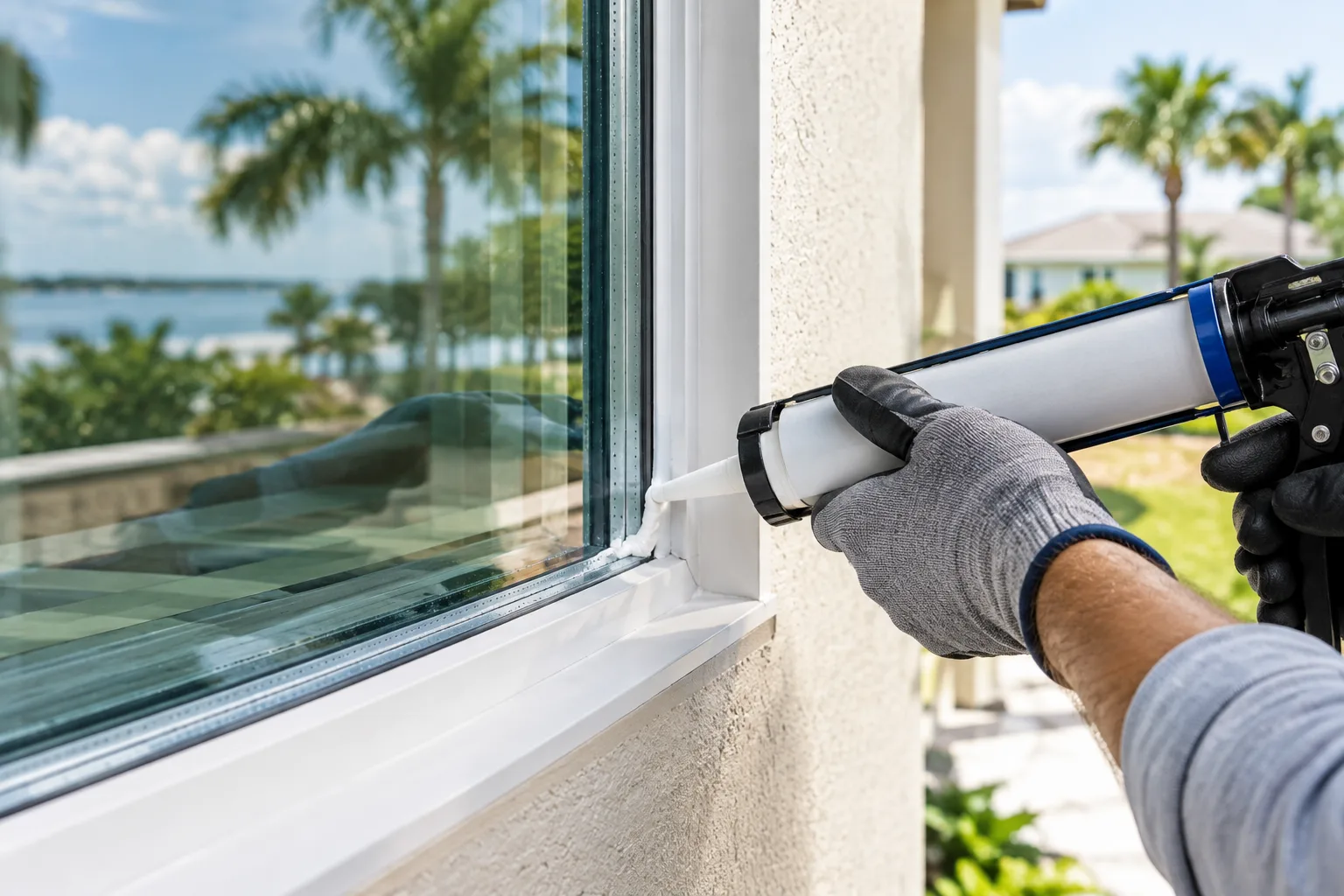
If you’ve noticed foggy glass, a musty smell near the frame, or a draft that wasn’t there last year, you’re probably wondering how to reseal double pane windows before the problem gets worse. The good news is that resealing is often possible and far cheaper than a full window replacement but only in certain situations. This guide walks through exactly when resealing works, how the process is done, and when Florida’s heat and humidity mean it’s time to call in a professional instead.
We’ll cover the full picture: diagnosing the problem, step-by-step DIY instructions, realistic costs for the Bradenton and Sarasota area, and the warning signs that mean resealing won’t cut it anymore.
Can Double Pane Windows Be Resealed?
Yes in most cases, double pane windows can be resealed, but it depends on exactly where the seal has failed. Double pane (or “dual pane”) windows have two separate seal systems: the outer perimeter seal between the glass unit and the window frame, and the internal seal that holds the two panes of glass together with a layer of insulating gas or air in between.
If the problem is the outer perimeter seal the caulk or glazing where the glass unit meets the frame resealing is a straightforward fix. Cleaning out the old material and applying fresh sealant restores the weatherproofing and stops drafts.
If the problem is the internal seal, though, the answer changes. Once moisture, fog, or a cloudy haze shows up between the two panes of glass, the insulated glass unit (IGU) itself has failed. At that point, can a double pane window be resealed the same way? Not really the insulating gas has already escaped and been replaced by humid air, and no amount of surface caulking will fix what’s happening inside the sealed unit. The only real fix is replacing the glass unit or the entire window.
Signs Your Double Pane Windows Need Resealing
Before grabbing a caulk gun, it helps to know which symptoms point to a fixable outer seal versus a failed inner seal. Look for:
- Drafts around the frame even when the window is fully closed usually an outer seal issue
- Peeling, cracked, or missing caulk/glazing along the frame’s edges
- Water staining on the interior sill or drywall below the window
- A slightly higher energy bill in rooms with older windows
- Condensation or fog trapped between the panes this is the sign that resealing alone won’t solve the problem
That last point is especially common in Southwest Florida, where humidity puts extra stress on window seals year-round. We’ve written in more detail about what causes that cloudy, foggy appearance in our post on mold and moisture between window panes, which is worth a read if condensation is your main concern.
Why Double Pane Window Seals Fail Faster in Florida
Every window seal degrades eventually, but the Gulf Coast climate speeds things up. Intense summer UV exposure dries out and cracks exterior caulk faster than it would in a milder climate. High humidity puts constant pressure on seals to keep moisture out, and salt air near the coast accelerates the breakdown of rubber gaskets and sealant compounds.
Add hurricane season into the mix wind-driven rain and pressure changes during storms can stress window seals that are already weakened and it’s easy to see why Bradenton and Sarasota homeowners deal with seal failure more often than homeowners further inland. If you’re preparing your home for storm season, our hurricane home prep checklist for Florida homes covers window and door sealing as part of a broader readiness plan.
How to Reseal a Double Pane Window: Step-by-Step
If you’ve confirmed the issue is with the outer perimeter seal (not fogging between the panes), here’s how the resealing process works.
Tools and Materials You’ll Need
- Utility knife or a 5-in-1 painter’s tool for scraping
- Heat gun (optional, for stubborn old caulk or foam tape)
- Mild detergent and a clean rag
- Painter’s tape
- Silicone or polyurethane exterior-grade caulk (or glazing compound for wood/metal frames)
- Caulk gun
- Putty knife (for glazing compound applications)
Step 1: Inspect and Diagnose the Seal Failure
Run your hand along the interior and exterior edges of the frame to feel for gaps, soft spots, or cracked caulk. Check for any fog or moisture trapped between the panes themselves this tells you whether you’re dealing with a simple resurface job or a failed IGU that needs replacement glass.
Step 2: Remove the Old Caulk or Glazing
Use a utility knife or scraper to cut away all the old, cracked, or shrunken sealant. Take your time here leftover residue will keep new caulk from bonding properly. A heat gun on a low setting can help soften stubborn old material without damaging the frame.
Step 3: Clean the Frame and Glass Thoroughly
Wipe down the entire area with mild detergent and let it dry completely before applying anything new. Any dust, mildew, or oily residue left behind will shorten the life of the new seal, especially in Florida’s humid air.
Step 4: Apply New Sealant or Glazing Compound
For most vinyl or aluminum-framed double pane windows, a high-quality silicone or polyurethane exterior caulk works well. Apply a smooth, continuous bead along the frame joint and glass edge, pressing it in to eliminate air pockets. Wood-framed windows often call for glazing compound instead, applied with a putty knife at a consistent angle.
Step 5: Let It Cure and Do a Final Check
Most sealants need 24 hours to fully cure avoid touching the window or exposing it to rain during that window. Once cured, do a final visual check and run your hand along the seam to confirm there are no gaps left.
Reglazing vs. Resealing Double Pane Windows: What’s the Difference?
These terms get used interchangeably, but they’re not quite the same thing. Resealing typically refers to replacing the exterior caulk or weatherstripping around the frame a maintenance-level fix. Reglazing a double pane window usually means removing the glass unit itself, cleaning or replacing the glazing compound that holds it in the sash, and sometimes replacing the glass unit entirely if the internal seal has failed.
If you’re searching for how to reglaze a double pane window because you’re seeing fog between the panes rather than drafts around the frame, you’re likely looking at glass unit replacement rather than a simple caulk job.
DIY vs. Professional: Can You Reseal Double Pane Windows Yourself?
Basic exterior caulking on a ground-floor window is a reasonable DIY project for a homeowner comfortable with hand tools. But there are a few situations where it’s worth bringing in a licensed professional instead:
- Second-story or hard-to-reach windows where ladder work introduces real fall risk
- Failed internal seals that require ordering and installing a replacement IGU to the exact frame specifications
- Older wood-framed windows where glazing compound work requires more finesse to avoid cracking the glass
- Multiple windows throughout the home, where a professional can work more efficiently and catch related issues (like frame rot or flashing problems) that a DIY repair might miss
If you’re unsure whether your project falls into handyman territory or needs a licensed specialist, our post on the difference between a handyman and a general contractor breaks down where that line typically falls.
How Much Does It Cost to Reseal Double Pane Windows in Bradenton?
Costs vary depending on window size, accessibility, frame material, and whether the internal seal has failed. As a general range for the Bradenton and Sarasota area:
| Repair Type | Typical Cost Range (per window) |
| Basic exterior resealing/caulking | $75 – $175 |
| Glazing compound reapplication (wood frames) | $100 – $250 |
| Full IGU (glass unit) replacement | $250 – $600+ |
| Full window replacement | $400 – $1,200+ |
These figures shift based on window size, height/accessibility, and whether custom glass needs to be ordered. For a broader look at what local handyman work typically runs, check out our detailed breakdown of handyman costs in Bradenton.
How Long Does a Resealed Window Last?
A properly done exterior reseal with quality silicone or polyurethane caulk typically holds up for 5 to 10 years in the Florida climate, though direct south- or west-facing windows with heavy sun exposure may need attention sooner. Glazing compound on wood-framed windows often needs revisiting every 5 to 7 years depending on sun and moisture exposure.
Keep in mind that resealing the outer perimeter doesn’t extend the life of the internal IGU seal that’s a separate component with its own lifespan, generally 10 to 20 years depending on manufacturing quality and climate exposure.
When Resealing Won’t Work: Signs You Need a Full Replacement
Resealing is a targeted fix, not a cure-all. It’s time to consider replacing the window (or at minimum the glass unit) if you notice:
- Persistent fog or condensation between the panes that doesn’t clear up
- Visible mineral staining or streaking on the interior glass surface
- A cracked or chipped glass pane
- Frame rot, warping, or structural damage around the window
- Multiple failed seals throughout the home, suggesting the windows are simply reaching end-of-life
If several windows in your home are showing these signs at once, it’s often more cost-effective in the long run to plan for replacement rather than repeatedly resealing units that are close to failing anyway.
Maintenance Tips to Extend the Life of Your Window Seals
A little routine maintenance goes a long way toward avoiding early seal failure:
- Inspect caulk lines once or twice a year, ideally before and after hurricane season
- Clean tracks and frames regularly to prevent grit and salt buildup from accelerating wear
- Address small caulk cracks early, before water gets behind the seal and causes frame damage
- Keep gutters and downspouts clear so water doesn’t pool against window frames
If you’re a seasonal or part-time Florida resident, seal issues can go unnoticed for months while the home sits vacant. This is one of the many small maintenance items covered during routine home watch visits in Bradenton, which help catch problems like this before they turn into costly repairs.
Safety Considerations Before You Start
Working with caulk guns and utility knives is low-risk, but a few precautions matter. Always use a stable ladder rated for the height you’re working at, and never lean out from a ladder to reach a window edge. If your home’s windows are original single-hung units with counterweights or older glazing, be aware that some pre-1978 homes may have lead-based glazing compound a professional inspection is the safer route in that case. And if a window seal failure is paired with any visible frame rot or structural softness, that’s a sign to bring in a licensed handyman rather than proceeding with a cosmetic reseal.
Frequently Asked Questions
Can dual pane windows be resealed if they’re already fogging up?
Once fog or condensation appears between the panes, the internal seal has failed and resealing the exterior won’t fix it. At that point, the glass unit needs to be replaced.
Is resealing double glazed windows the same as resealing double pane windows?
Yes “double glazed” and “double pane” refer to the same type of window construction, just different regional terminology. The resealing process is the same either way.
How do I know if it’s the seal or the whole window failing?
If you feel a draft but the glass is still clear, it’s usually the perimeter seal. If the glass itself looks foggy, cloudy, or has visible moisture trapped inside, the insulated glass unit has failed.
Can I reseal just one window, or should I do them all at once?
You can reseal individual windows as needed. However, if your windows are all the same age, seeing failure in one is often an early warning that others aren’t far behind.
Final Thoughts
Resealing a double pane window is a practical, budget-friendly fix when the problem is limited to the outer perimeter seal but it’s not a fix for fogged or failed glass units. Knowing which situation you’re dealing with is the difference between a simple caulk job and a window replacement.
For homeowners across Bradenton, Manatee County, and Sarasota County, Shoreline Handyman & Home Watch Services has handled window seal repairs, glazing work, and the broader maintenance issues that come with Florida’s climate, and this guide reflects that hands-on, licensed experience.