
Your toilet tank hisses, trickles into the bowl, or refills for a few seconds every so often when nobody has touched the handle. If you’re asking “why does my toilet keep running?”, the answer is usually simple. In most cases, a worn or misaligned flapper is letting water leak into the bowl, or the fill valve isn’t shutting off when the tank is full. Both are usually DIY-safe, inexpensive part swaps.
This guide walks you through a 15-minute diagnosis, the 6 causes and how to fix each one, how to choose the right replacement part, and the jobs that belong to a licensed plumber. The advice comes from our Bradenton handyman and home-watch team, who work in homes across Manatee and Sarasota Counties.
What Is the Most Common Cause of a Constantly Running Toilet?
The most common reason a toilet keeps running is a worn flapper. That rubber seal over the tank drain warps, hardens or collects scale, so water seeps into the bowl and the fill valve keeps topping the tank up. The second most common cause is a fill valve or float set too high, which sends water down the overflow tube.
To answer “why is my toilet running?” for your own toilet, you need about 15 minutes and no tools. The checks below show you which of the two it is.
How a Toilet Tank Works (in 60 Seconds)
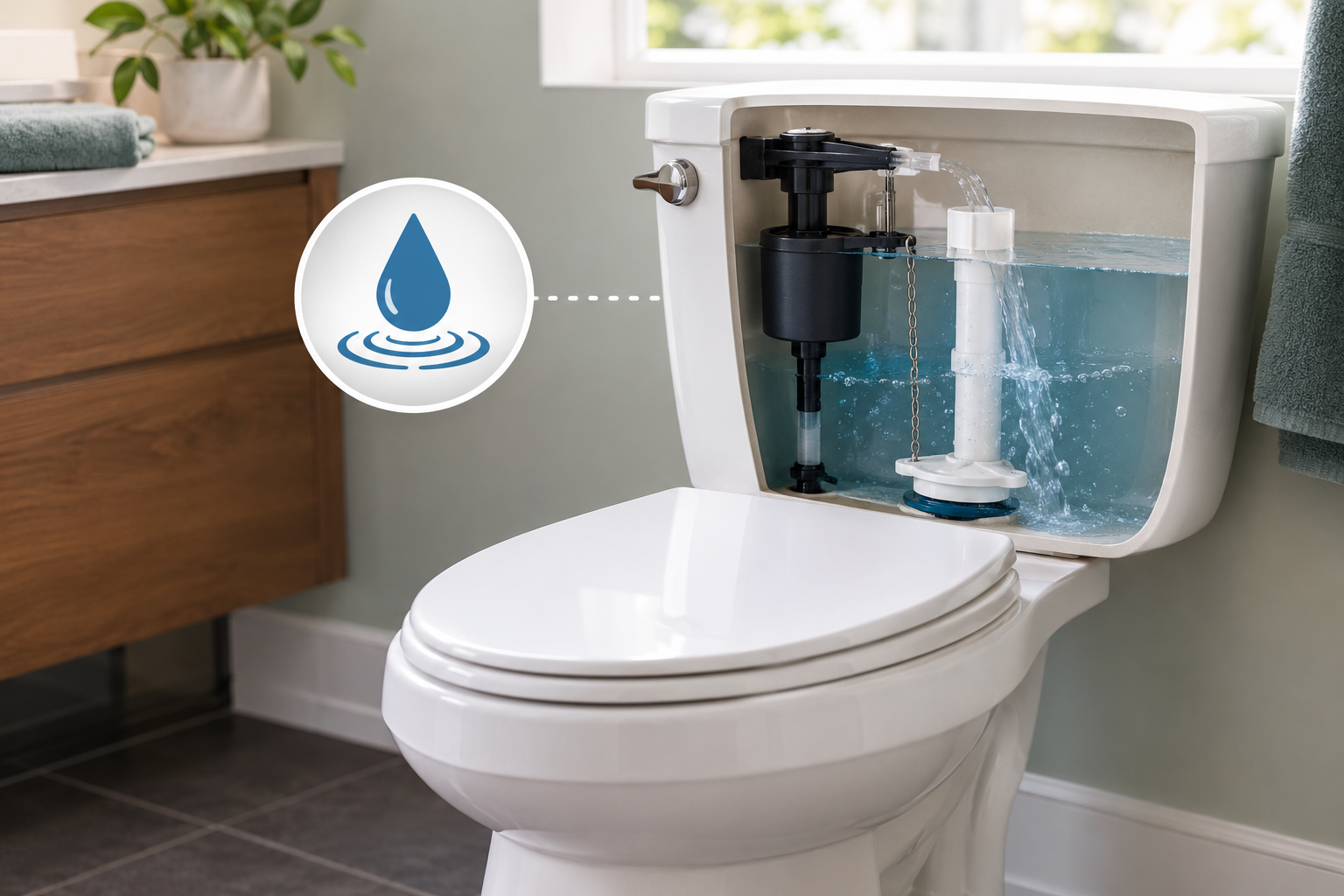
Think of the tank as a bucket with a stopper at the bottom and a water-level switch on the side. Here are the parts, in the order the water moves:
· Flush handle and chain: lift the flapper when you press the handle.
· Flapper: the rubber stopper that holds water in the tank.
· Flush valve and valve seat: the drain opening at the bottom of the tank that the flapper seals against.
· Fill valve: the tall valve, usually on the left, that refills the tank.
· Float: a cup or ball that rises with the water and tells the fill valve when to stop.
· Overflow tube: the open pipe in the middle that stops the tank from spilling over.
· Refill tube: the small hose clipped to the overflow tube that refills the bowl.
Some Kohler and American Standard models use a tall cylinder called a canister flush valve, with a flat seal instead of a flapper. The logic is the same, but the part is different. Once you know these seven parts, “my toilet keeps running” becomes a specific problem you can fix.
How to Find the Cause: Listen, Look, Test
Three checks will point you to the failing part before you buy anything. They take about 15 minutes and need no tools.
Listen
Different sounds come from different parts:
· A steady hiss usually means the fill valve. Water is still coming in.
· A quiet trickle into the bowl usually means the flapper or valve seat. Water is leaking out.
· A refill that kicks on for a few seconds every 20 minutes or so with nobody using the toilet is a slow flapper leak. People call this a “phantom flush.”
When toilet water keeps running without a clear sound either way, move on to the visual check.
Look
Take the tank lid off and set it somewhere flat, because they crack easily. Then check these five things:
· Overflow tube: is water spilling into it? If so, the level is too high, and the problem is the float or the fill valve.
· Fill line: find the fill-line mark stamped inside the tank or on the overflow tube. If there isn’t one, the common rule is about 1 inch below the top of the tube.
· Chain slack: leave about ½ inch of slack with the flapper closed. A tight chain holds the flapper open, and a long chain can catch underneath it.
· Flapper position: is it sitting square on the seat?
· Crust: is there white or green crust on the seat or the flapper?
Test (the Food-Coloring Dye Test)
The dye test confirms a silent leak:
1. Put a few drops of food coloring, or a dye tablet, in the tank.
2. Don’t flush for 10-15 minutes.
3. Colour in the bowl means the flapper or valve seat is leaking.
4. A clear bowl with water still running points to the fill valve or float.
5. Flush afterwards so the dye doesn’t stain the bowl.
If your toilet keeps running after a flush and won’t stop, one of two things is happening. Either the chain or flapper didn’t reseat, or the float isn’t rising high enough to shut the valve.
The 6 Causes of a Running Toilet and How to Fix Each
If your toilet won’t stop running, it is almost always one of these six. Each one follows the same four lines, so you can match your symptom quickly.
1. A Worn or Misaligned Flapper
Symptom: dye in the bowl, a trickle, or phantom refills. Why it happens: the rubber warps, hardens or picks up scale over time. Chlorinated water speeds up that wear. Fix: shut off the water, unhook the old flapper from the ears or ring on the overflow tube, and fit a matching new one. Difficulty: Easy.
2. A Chain That’s Too Tight or Too Slack
Symptom: the toilet runs right after a flush, or you have to jiggle the handle. Why it happens: a tight chain holds the flapper up. A long chain drapes under the flapper and stops it from sealing. Fix: move the chain clip so there’s about ½ inch of slack. Trim any excess so it can’t fall under the flapper. Difficulty: Easy.
3. A Float Set Too High
Symptom: water flows into the overflow tube, but the dye test stays clear. Why it happens: the float shuts the fill valve off too late, so the water rises past the top of the tube. Fix: on a cup-style float, turn the adjustment screw or squeeze the clip to lower it. On an older ball float, bend the arm down slightly. Either way, bring the water down to the fill line. Difficulty: Easy.
4. A Faulty Fill Valve
Symptom: a constant hiss even at the correct water level, or a slow or noisy refill. Why it happens: a worn seal, or grit lodged inside the valve. Fix: start by flushing out debris. Shut off the water, remove the valve cap and run the water briefly into a cup held over the valve. If it still hisses, replace the valve. Difficulty: Moderate.
5. A Cracked or Too-Short Overflow Tube
Symptom: water drains down the tube even though the level is already correct, or you can see a crack. Why it happens: the overflow tube is part of the flush valve. A crack or a tube cut too short gives water an open path to the bowl. Fix: replace the flush valve. That usually means taking the tank off the bowl and fitting new tank-to-bowl gaskets and bolts. Difficulty: Moderate to Call a pro. This is where a lot of DIY jobs go wrong. Over-tightened bolts can crack porcelain, and a badly seated gasket leaks onto the floor.
6. Mineral Scale or Corrosion on the Flush Valve Seat
Symptom: a brand-new flapper still leaks dye. Why it happens: hard-water scale or corrosion leaves the seat rough, so no flapper can seal against it. Many Southwest Florida homes see scale build up on fixtures, and the warm, humid climate is hard on rubber parts. Fix: scrub the seat smooth with a non-scratch pad, or use a seat-repair kit. If the seat is pitted, the flush valve needs replacing. Difficulty: Moderate.
If the same fixture keeps failing after you’ve fixed it once, that’s one of the common signs it’s time to call a handyman.
How to Stop a Toilet From Running: Steps and a Quick-Reference Table
The routine is the same whatever the cause. Only step 3 changes.
The Basic Fix, Step by Step
Here is how to stop a toilet from running once you know the culprit:
6. Shut off the water. Turn the shutoff valve behind the toilet clockwise. If it is seized or drips when you turn it, stop there: that is a plumber job.
7. Empty the tank. Flush, then sponge out the water that’s left.
8. Fix the part. Adjust or replace the part you identified.
9. Refill. Open the shutoff valve again and let the tank climb to the fill line.
10. Confirm. Repeat the dye test to make sure the fix worked.
Symptom-to-Fix Table
| Symptom | Likely part | DIY difficulty | Call a pro if… |
| Dye in the bowl | Flapper | Easy | It still leaks after a new flapper and a cleaned seat |
| Runs after flush | Chain or flapper alignment | Easy | The handle or lever is broken inside a one-piece tank |
| Water into overflow tube | Float or fill level | Easy | The fill valve won’t adjust |
| Constant hiss | Fill valve | Moderate | The shutoff valve won’t close fully |
| Crack in tube or tank | Flush valve or tank | Call a pro | Always, for porcelain |
| Water on the floor | Wax ring or supply line | Call a pro | Always |
What Happens If You Ignore a Running Toilet
Left alone, it sends clean water straight down the drain, and you pay for it on both the water and the sewer side of your bill. The fix is often small: according to EPA WaterSense, replacing a worn flapper can save a home up to 200 gallons of water per day.
In a seasonal or empty Florida home, the risk is time. A silent flapper leak can run for weeks before anyone is there to hear it, and nobody spots the problem until the bill arrives. Regular home-watch checks catch this kind of quiet fault early.
Once you know which part is failing, the next questions are which replacement to buy and whether to do the job yourself.
Choosing the Right Replacement Part
The dye test has already told you which part you need. Dye in the bowl means a flapper, or a canister seal on a canister toilet. A hiss, or water flowing into the overflow tube, means the fill valve or float. Pick the part that matches your toilet, not just the cheapest one on the hook.
Flapper Types and Sizes
What size toilet flapper do I need? Most toilets take a 2-inch or a 3-inch flapper. You can check yours in three ways:
· Measure the drain opening.
· Read the maker’s stamp inside the tank.
· Take the old flapper to the store.
Here are the main toilet flapper types and when each fits best:
· Universal toilet flapper: fits many standard 2-inch toilets. Best for older, common models.
· Brand-specific flapper: best for low-flow and newer toilets. On these models, a universal flapper can change how much water each flush uses.
· Adjustable flapper: lets you set how long the flapper stays open. Best for low-flow toilets with weak flushes.
· Canister seal: if you have a canister toilet, you need that brand’s own seal, not a flapper.
On material, chlorine-resistant and silicone flappers are sold for homes on treated water. Choose by fit first, then material.
Picking a Fill Valve
The best toilet fill valve is the one that fits your tank. Check four things on the package before you buy:
· Height range: the adjustable range must suit your tank’s depth.
· Critical-level (CL) mark: this mark has to sit at the height the package instructions require above the overflow tube. It is the anti-siphon safety point that keeps tank water from being drawn back into your supply line.
· Adjustable water level: lets you set the fill line exactly.
· Quieter refill: a comfort feature, not a must.
One Part or a Full Repair Kit?
A toilet repair kit usually bundles a flapper and a fill valve, and sometimes a flush valve and gaskets. A kit makes sense when:
· the toilet is old,
· more than one part is worn, or
· the valve seat is heavily scaled.
A single part makes sense when the dye test isolated one failure and the rest of the tank looks sound. If you’re unsure which part fits your model, note the dye-test result and the toilet brand before asking anyone for an estimate. With those two details, whoever you call can tell you quickly what the job involves.
DIY, Handyman or Licensed Plumber: Who Should Fix It?
Most running toilets are within reach of a careful homeowner. A few problems are not, and it helps to know where that line sits before you start.
| Job | DIY-safe? | Handyman fixture repair | Licensed plumber |
| Flapper or chain | Yes | Yes | Not needed |
| Float adjustment | Yes | Yes | Not needed |
| Fill valve swap | Yes, with care | Yes | Not needed |
| Flush valve or tank removal | Moderate | Depends on the job | If gaskets or bolts are corroded |
| Cracked porcelain | No | No | Yes |
| Supply line or shutoff valve leak | No | No | Yes |
| Wax ring or floor leak | No | No | Yes |
| Problem returns after new parts | No | Refer | Yes |
To be plain about it: Shoreline Handyman & Home Watch does fixture repair such as flapper and fill-valve work. We are not a licensed plumbing contractor, and we refer larger plumbing jobs to licensed contractors.
A handyman also suits people who simply don’t want to do the job themselves. If you rent, check with your landlord before anyone touches the toilet. If you’re weighing who to hire for wider work around the house, here’s when to hire a handyman or a contractor.
For the jobs in the handyman column, here’s what a repair costs and what a visit involves.
Running Toilet Repair Cost and What a Fixture Repair Visit Involves
Whether you hire a handyman or a plumber for a running toilet, the bill depends on the part and on what the visit finds. A flapper swap and a tank-off flush valve job are very different amounts of work.
What Drives the Cost
Four things shape a running toilet repair cost:
· The part: a flapper is the smallest job, a fill valve is next, and a flush valve is the largest.
· Tank removal: taking the tank off adds time, plus new gaskets and bolts.
· Shutoff valve and bolts: a seized valve or rusted bolts can turn a simple job into a plumber’s job.
· Brand-specific parts: low-flow and canister toilets often need the maker’s own parts.
If you do it yourself, flappers and fill valves are inexpensive, everyday hardware-store parts. When you hire it out, the toilet fill valve replacement cost depends on the same factors listed above. At Shoreline, estimates are free for clearly defined jobs, and any troubleshooting service-call fee is disclosed before work starts. For general pricing in the area, see typical handyman rates in Bradenton.
Repair or Replace the Toilet?
Repair a toilet that works and has a sound bowl and tank. A flapper or fill valve is a small fix, and it doesn’t justify a new toilet.
Replace the toilet when the bowl or tank is cracked, or when parts keep failing. A cracked tank or bowl is a job for a licensed plumber.
What a Fixture Repair Visit Looks Like
A toilet repair service visit for a running toilet follows the same logic as this guide:
11. Run the dye test.
12. Check the water level and the chain.
13. Replace the failing part.
14. Test several flushes.
15. Check for leaks at the supply line and the base.
Shoreline is led by founder Eric Poulin, who spent 10+ years as a firefighter and has a home-inspection background. Our team has cared for 100+ homes across the area. If you’d rather leave handyman toilet repair to someone else, you can book a fixture repair with our Bradenton team for flapper and fill-valve work in Bradenton, Manatee and Sarasota Counties, or call +1 941-414-2835.
Running Toilet FAQs
Once you’ve searched “why does my toilet keep running,” a few follow-up questions come up again and again. Here are short answers to four of them.
Why does my toilet run when no one is using it?
This is phantom (or ghost) flushing. A slow leak past the flapper lowers the tank level until the fill valve switches on to refill it. The dye test confirms it: colour in the bowl means the flapper or seat is leaking.
How much water does a running toilet waste?
It depends on the leak, but it adds up. The EPA WaterSense Fix a Leak Week program reports that the average household’s leaks can waste nearly 10,000 gallons of water a year. A toilet that runs constantly adds to that total.
Is it safe to fix a running toilet myself?
Yes, for the flapper, chain, float and fill valve, as long as the water is shut off first. No, for cracked porcelain, supply-line or shutoff-valve leaks, and floor leaks. Those belong to a licensed plumber.
Can a running toilet cause water damage?
Not on its own. Water running inside the tank goes down the drain, so the toilet isn’t flooding anything. Water outside the toilet, at the supply line or around the base, is a different problem and needs a licensed plumber quickly.
Conclusion: Fixing a Toilet That Keeps Running
So, why does my toilet keep running? Start with listen, look, test. A hiss points to the fill valve, a trickle or dye in the bowl points to the flapper, and most cases come down to those two parts. Chain, float, flapper and fill-valve fixes are DIY-safe with the water shut off.
Cracked porcelain, supply-line or shutoff leaks, and anything on the floor go to a licensed plumber. For fixture repair, or for keeping an eye on an empty home while you’re away, Shoreline Handyman & Home Watch is the next place to turn. If you have questions, get in touch with Shoreline.