
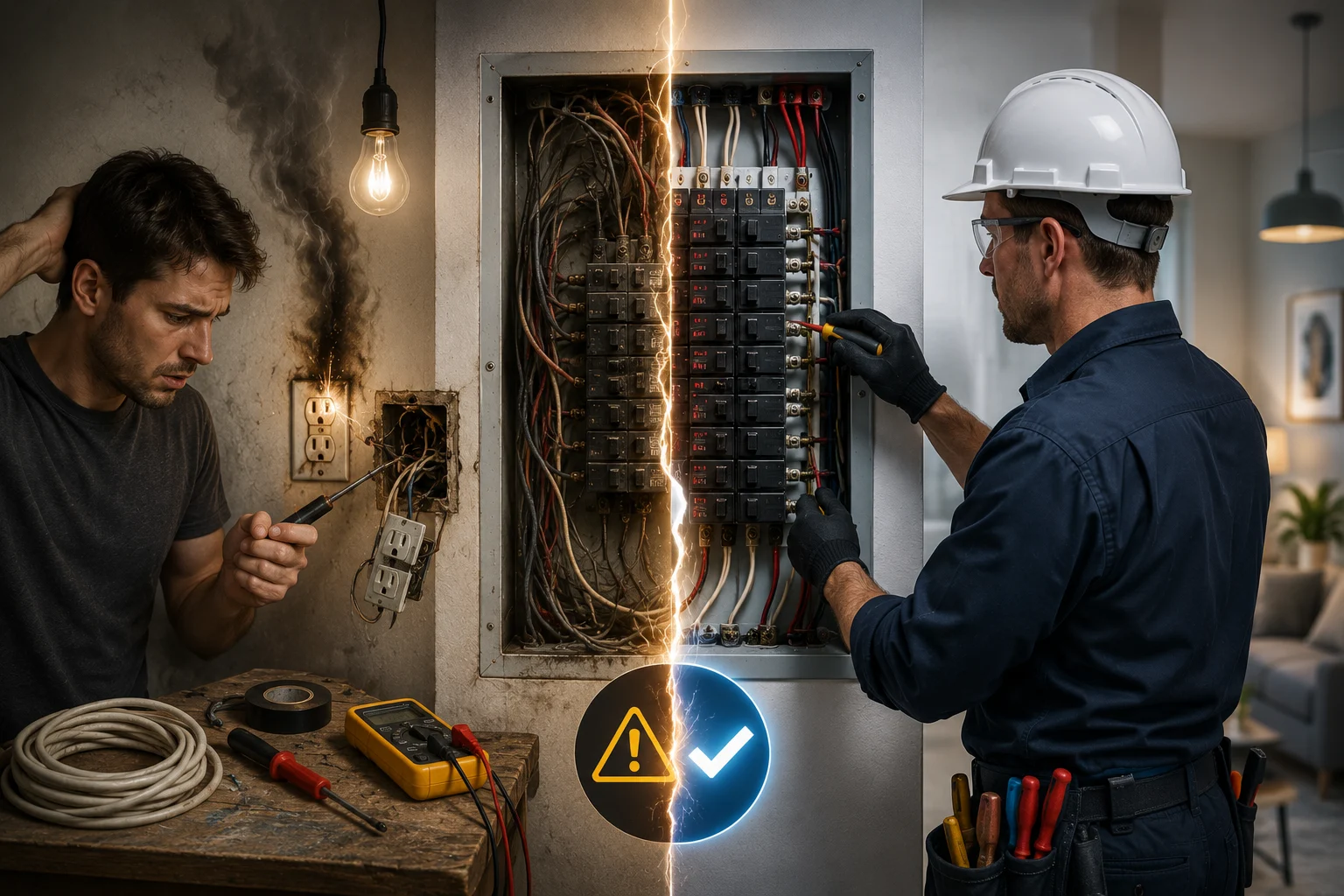
If you’ve ever stood in front of a buzzing outlet with a screwdriver in hand, wondering whether to tackle it yourself, you’re not alone. Understanding diy electrical repair risks is the first step to knowing which projects are reasonable for a confident homeowner and which ones are best left alone. Electrical work has a way of looking simpler than it actually is a loose screw here, a flickering switch there until a small mistake turns into a shock, a house fire, or a code violation that ends up costing far more than a service call ever would have.
This guide walks through what’s genuinely safe to handle yourself, what the real dangers of DIY electrical work look like, and what Bradenton, Manatee County, and Sarasota County homeowners specifically need to know about Florida’s electrical code before they open a panel or pull a permit.
Why Electrical Work Isn’t Like Other DIY Home Projects?
Most home improvement mistakes are forgiving. A crooked shelf can be re-hung, and a bad paint line can be repainted. Electrical work doesn’t offer that same margin for error. Wires are hidden inside walls, a circuit that looks dead can still be energized through a shared neutral, and a mistake that seems fine on day one can smolder inside a wall cavity for months before it becomes a visible problem.
It also isn’t isolated the way a single fixture repair feels. Your home’s electrical system is one connected network, so a change at one outlet or junction box can affect load, grounding, and safety somewhere else in the house entirely. That’s the real reason licensed electricians train for years before working unsupervised the skill isn’t just knowing which wire is which, it’s understanding how the whole system behaves together.
The Real Dangers of DIY Electrical Work
Homeowners usually weigh a DIY electrical project in terms of time and money saved. The dangers of DIY electrical work are less visible up front, which is exactly what makes them worth understanding before you start.
Shock and Electrocution
Household circuits carry more than enough current to cause a serious injury, and even brief contact with a live wire can cause burns or a dangerous heart rhythm. Circuits that have been switched off at the breaker can still be energized if the panel is mislabeled, which is more common in older Florida homes than most owners realize.
Arc Flash and Fire Risk
Loose connections, reversed wiring, and overloaded circuits are common causes of overheating that can smolder inside a wall for weeks before igniting nearby insulation or framing. An arc flash can also occur in a fraction of a second, causing serious burns even without direct contact with a wire.
Damage That Doesn’t Show Up Right Away
A DIY repair can appear to work perfectly for months. Underneath, a poorly seated wire nut or an ungrounded outlet can slowly corrode or overheat, quietly turning a five-minute fix into a much larger and more expensive repair later on.
Electrical Safety Tips Homeowners Should Actually Follow
Not every electrical task requires a professional, and knowing the difference is one of the more useful electrical safety tips homeowners can apply day to day. The lists below reflect what’s genuinely low-risk versus what tends to escalate quickly.
What You Can Reasonably Handle Yourself?
● Replacing a lightbulb or a plug-in lamp cord
● Resetting a tripped breaker or pressing the test/reset button on a GFCI outlet
● Swapping batteries in a battery-powered smoke or carbon monoxide detector
● Tightening a loose cover plate with the circuit switched off first
● Replacing a simple plug-in appliance cord or power strip
Warning Signs That Mean Stop and Call a Professional
If you notice any of the following, it’s time to put the screwdriver down. We cover several of these red flags in more depth in our guide to common warning signs of electrical problems in your home, but at a minimum, treat these as immediate stop signs:
● A breaker that trips repeatedly, even after resetting it
● Outlets or switch plates that feel warm to the touch
● A persistent burning smell with no obvious source
● Buzzing, crackling, or humming coming from an outlet or panel
● Discoloration or scorch marks around an outlet or switch
● Lights that flicker across multiple rooms, not just one fixture
Any one of these on its own is worth a professional look. More than one at the same time is a sign the issue is bigger than a single fixture, and it’s not a good candidate for a weekend project.
Electrical Code Compliance in Florida: What Bradenton Homeowners Need to Know?
Florida takes electrical code compliance seriously, and for good reason given the state’s heat, humidity, and storm exposure. Electrical work in Florida falls under the Florida Building Code, and state law restricts electrical contracting work to licensed electrical contractors a homeowner generally cannot hire an unlicensed person to perform electrical contracting work on their behalf, even informally.
Permits matter more than most homeowners expect. Adding a new circuit, upgrading a panel, wiring a dedicated circuit for an appliance, or installing something like an EV charger or a generator interlock typically requires a permit and inspection in Manatee and Sarasota County, regardless of how small the physical job looks. Simple like-for-like replacements swapping a broken outlet, switch, or light fixture for an identical one are usually the exception, but the line isn’t always obvious from the outside.
Skipping a required permit doesn’t just risk a fine. Unpermitted electrical work can complicate a home sale when a buyer’s inspector flags it, and it can give an insurance company grounds to deny a claim if that wiring is later connected to a fire or damage. For anything beyond a simple swap, it’s worth a quick call to confirm whether a permit applies before work begins.
When to Call a Professional Electrician Instead of DIYing It?
Knowing when to call a professional electrician usually comes down to whether the work changes your home’s electrical system or simply maintains it. The following situations are worth handing off every time:
● Panel upgrades, sub-panel additions, or any work inside the main service panel
● Whole-home or partial rewiring, including replacing outdated aluminum or knob-and-tube wiring
● Adding new circuits for kitchens, garages, workshops, or major appliances
● Installing GFCI or AFCI protection where current code requires it and it isn’t already present
● Wiring for pools, docks, outdoor kitchens, or anything near water
● EV charger installation or backup generator hookups
● Any project that requires pulling a permit from Manatee or Sarasota County
For the smaller, everyday repairs that fall short of that list a dead outlet, a light fixture that needs replacing, a ceiling fan that’s wired incorrectly, or a switch that’s stopped working our Bradenton electrician services cover exactly that middle ground. We’re upfront that Shoreline is a handyman team, not a licensed electrical contracting company, and for anything that turns out to need a licensed electrician, we’ll say so honestly rather than working outside our scope.
If you’re not sure which category your project falls into, that’s a normal question to have, and it’s a fast one to answer with a quick phone call. Reaching out for a free estimate before you start is almost always cheaper than troubleshooting a DIY attempt that didn’t go as planned.
The Hidden Cost of a DIY Electrical Repair Gone Wrong
The appeal of DIY electrical work is almost always the same: it looks like a way to skip a service call fee. In practice, a botched attempt tends to cost more than hiring it out correctly the first time, once you add up the full picture.
● Paying a licensed electrician to undo incorrect wiring before they can even start the actual repair
● Retroactive permit fees or fines if the work is discovered during an inspection or a home sale
● Damaged appliances or electronics from a miswired circuit or voltage issue
● A denied insurance claim if unpermitted work is later tied to fire or water damage
● Emergency service rates instead of a scheduled, planned repair
If cost is the main reason you’re considering a DIY approach, it’s worth comparing against actual local pricing rather than guessing. Our Bradenton handyman cost guide breaks down what typical repair visits run in this area, and in most cases the gap between DIY and professional is smaller than homeowners expect especially once a mistake is factored in.
It also helps to know which type of pro actually matches the job. Our breakdown of handyman vs. general contractor work is a useful reference if you’re not sure whether your project needs a handyman, a licensed electrician, or a full contractor matching the job to the right professional the first time avoids paying twice.
Electrical Risks That Are Specific to Florida Homes
Heat, humidity, and storm season add a layer of risk that a lot of general electrical advice doesn’t account for. Salt air along the coast accelerates corrosion in outdoor outlets, panels, and light fixtures, which is why exterior electrical components in Bradenton and Sarasota County tend to wear out faster than they would inland. Humidity can also degrade wire insulation over time, especially in attics and garages that aren’t climate controlled.
Storm season brings its own set of hazards. Connecting a portable generator directly to your home’s wiring without a proper transfer switch can backfeed electricity into the grid, which is dangerous for utility crews working to restore power and is illegal in most jurisdictions. After a storm, downed lines, storm-damaged panels, and flooded outlets should always be treated as live until a professional confirms otherwise, even if the power appears to be off.
This is also where seasonal homeowners face a unique blind spot. If you split time between Florida and somewhere else, a failing outlet, a corroding panel, or a slowly overheating connection can go unnoticed for months while the home sits empty. That’s precisely the gap our home watch services are built to close, with regular visits and reporting that can catch an electrical issue long before it becomes a fire, a flooded panel, or a surprise when you return.
How Shoreline Handles Electrical Repairs the Right Way?
Our approach to electrical work is built around honesty about scope. As part of our broader Bradenton handyman services, we handle the everyday electrical repairs that come up in most homes fixture swaps, outlet and switch replacements, ceiling fans, and general troubleshooting with the same code awareness and attention to detail we bring to every job.
For anything that goes beyond that scope, like panel upgrades, full rewiring, or new circuit installation, we’ll tell you directly and point you toward a licensed electrical contractor rather than attempting work outside our expertise. If you’re still deciding whether your project is a simple fix or something bigger, our guide on signs it’s time to call a handyman is a good starting point before you decide whether to DIY it, call us, or bring in a licensed electrician.
Reach out for a free estimate on a straightforward repair, and we’ll let you know upfront what it involves before any work begins.
The Bottom Line
Most homes have a mix of electrical tasks: some genuinely safe for a homeowner to handle, and others that carry real risk of shock, fire, or a code violation that follows you into a future home sale. The safest approach is knowing the difference before you start, watching for the warning signs that mean stop, and treating Florida’s permit and code requirements as more than a formality.
Whether a project turns out to be a quick fixture swap or something that needs a licensed electrician, Shoreline Handyman & Home Watch Services has spent years helping Bradenton, Manatee County, and Sarasota County homeowners tell the difference and get it handled correctly the first time.